
37 results

Guangyu Chen (Nathan) is a machine learning researcher at Kimi, Moonshot AI, specializing in model architecture, efficient attention mechanisms, and continual learning. Co-first author of the Attention Residuals paper, praised by Elon Musk and Andrej Karpathy.

Alfred Paul "Al" Seckel was an American cognitive neuroscientist, author, and prominent skeptic known for his work in popularizing optical illusions and perceptual phenomena. He was an instructor at the California Institute of Technology and co-founded the Southern California Skeptics, serving as its executive director. Seckel lectured extensively on illusions at prestigious institutions like Harvard, MIT, and Caltech, using them as a window into the hidden rules of the human perceptual system.
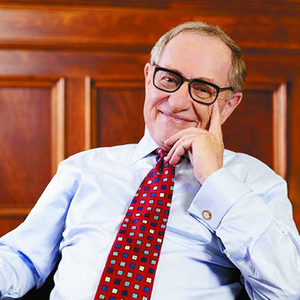
Alan Dershowitz is an American lawyer and legal scholar, renowned for his expertise in U.S. constitutional and criminal law. He served as a professor at Harvard Law School for nearly five decades, where he was the Felix Frankfurter Professor of Law. Dershowitz is also a prominent defender of civil liberties and human rights, known for his extensive writings and high-profile litigation.
Alexey Kurakin is a Senior Staff Research Engineer at Google DeepMind, specializing in the security and privacy of machine learning, large language models (LLMs), and differential privacy. He has a long tenure at Google, previously working as a Research Software Engineer at Google Brain, where he focused on fundamental research and applications in machine learning. Kurakin is a prolific researcher, publishing papers at top machine learning conferences like NeurIPS, ICLR, and ICML, and is highly cited in the field.
Anca Dragan is a prominent figure in AI and robotics, currently serving as the Director of AI Safety and Alignment at Google DeepMind while on leave from her role as an Associate Professor at UC Berkeley's EECS Department. Her research, conducted through the InterACT Lab, focuses on algorithms for human-AI and human-robot interaction, particularly on AI alignment to ensure agents act in accordance with human goals and values. She is recognized for her work in reward engineering and enabling AI agents to work collaboratively with people.
Andrew Ng is a globally recognized leader in Artificial Intelligence, known for co-founding Coursera and founding DeepLearning.AI, AI Fund, and LandingAI. He is a former head of Baidu AI Group and the founder of the Google Brain team. He currently serves as an Adjunct Professor of Computer Science at Stanford University.
Been Kim is a Senior Staff Research Scientist at Google DeepMind, specializing in interpretable machine learning (Explainable AI). Her research focuses on developing human-centered tools and concepts to help people communicate with and understand complex ML models. She is known for her work on TCAV (Testing with Concept Activation Vectors), which received the UNESCO Netexplo award, and has given keynotes at major conferences like ICLR 2022 and ECML 2020.
Chelsea Finn is an Assistant Professor of Computer Science and Electrical Engineering at Stanford University, where she directs the IRIS (Intelligence, Robotics, and Interactive Systems) Lab. She is a leading American computer scientist specializing in machine learning, robotics, and reinforcement learning. Finn is also the co-founder of Physical Intelligence, a company focused on developing intelligent physical systems. Her work has been highly influential, evidenced by over 100,000 citations.
Dawn Song is a highly distinguished Professor of Computer Science at UC Berkeley, where she also co-directs the Berkeley RDI Center. Her research focuses on critical areas including AI safety and security, Agentic AI, deep learning, and decentralization technology. A serial entrepreneur, she is the founder of Oasis Labs and is recognized for her significant contributions to computer security and privacy, including being a recipient of the prestigious MacArthur Fellowship.
Fei-Fei Li is a Chinese-born American computer scientist, best known as the inventor of ImageNet and the ImageNet Challenge, a pivotal dataset that fueled the rapid advancement of modern computer vision and deep learning. She is the Sequoia Professor of Computer Science at Stanford University and the Co-Director of the Stanford Institute for Human-Centered Artificial Intelligence (HAI). She also co-founded the non-profit AI4ALL and is the CEO and Cofounder of World Labs.
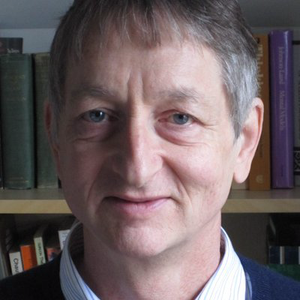
Geoffrey Hinton is a renowned computer scientist and Professor Emeritus at the University of Toronto, widely recognized as the "Godfather of AI" for his foundational work on artificial neural networks and deep learning. He is a 2024 Nobel Laureate in Physics. Recently, he has become a vocal critic of the potential dangers of the technology he helped create.
George Church is a pioneering geneticist and synthetic biologist, currently serving as the Robert Winthrop Professor of Genetics at Harvard Medical School. He is renowned for developing the first methods for direct genome sequencing and for his contributions to next-generation DNA sequencing technologies. Through his Harvard lab, he has co-founded approximately 50 biotechnology companies, including Editas Medicine and Colossal Biosciences, focusing on areas like gene editing, synthetic biology, and medical diagnostics.
Ian Osband is a prominent Research Scientist currently working at Google, focusing on foundational research for the next generation of AI. Previously, he was a Member of Technical Staff at OpenAI and a Research Scientist at DeepMind for over seven years. His core research expertise lies in reinforcement learning and decision-making under uncertainty, with notable contributions to deep exploration techniques like Randomized Value Functions and Posterior Sampling.
Ian Goodfellow is a highly influential American computer scientist and executive, best known as the inventor of Generative Adversarial Networks (GANs), a foundational concept in modern AI. He currently serves as a Research Scientist at DeepMind and has held significant roles at major tech companies including Director of Machine Learning at Apple's Special Projects Group, and various research positions at Google and OpenAI. He is also the lead author of the widely-cited textbook "Deep Learning."
Jacob Steinhardt is an Assistant Professor of Statistics and Electrical Engineering and Computer Sciences (EECS) at UC Berkeley, where he is affiliated with the Berkeley Artificial Intelligence Research Lab (BAIR). He is also the Co-founder and CEO of Transluce, a company he started in July 2024. Steinhardt's research focuses on machine learning, particularly in areas like robustness, reward specification, and scalable alignment of AI systems. He previously held roles as a Research Scientist at OpenAI and a technical advisor at Open Philanthropy.
Jeff Dean is the Chief Scientist at Google DeepMind and Google Research, and the co-technical lead for the Gemini project. As one of Google's earliest employees, he was instrumental in developing foundational technologies like MapReduce, BigTable, and Spanner, which underpin much of Google's infrastructure. He is a leading figure in the field of artificial intelligence and distributed systems, overseeing Google's AI research division.
Jure Leskovec is a Professor of Computer Science at Stanford University, specializing in machine learning, deep learning, and graph neural networks. He is also the Co-Founder and Chief Scientist of Kumo.AI, a company focused on applying AI to enterprise data. Previously, he served as Chief Scientist at Pinterest and has made significant contributions to the field of large-scale network analysis and graph representation learning.
Karen Hao is an award-winning journalist and author, best known for her coverage of artificial intelligence and its societal impacts. She is the author of the upcoming book "EMPIRE OF AI" and leads the AI Spotlight Series at the Pulitzer Center, training journalists worldwide on AI coverage. Her work has been recognized with an American National Magazine Award and an American Humanist Media Award.
Kevin Murphy is a Principal Scientist at Google DeepMind, specializing in Artificial Intelligence, Machine Learning, and Bayesian modeling. He is a highly respected figure in the field, known for his comprehensive book series on probabilistic machine learning, including the seminal "Machine Learning: A Probabilistic Perspective" (2012). His career includes significant research roles at Google and an Associate Professor position at the University of British Columbia.
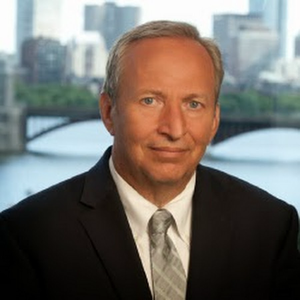
Lawrence H. Summers is a prominent American economist and former government official, currently serving as the Charles W. Eliot University Professor and President Emeritus at Harvard University. He has held significant roles, including the 71st United States Secretary of the Treasury under President Bill Clinton and Director of the National Economic Council for President Barack Obama. Summers is recognized for his academic contributions and his influential, though sometimes controversial, public service career.

Lawrence Maxwell Krauss is a Canadian-American theoretical physicist and cosmologist, best known for his work in cosmology and as a prominent public intellectual advocating for science and public policy. He is a best-selling author and previously served as the Director of Arizona State University's Origins Project. He is currently the President of The Origins Project Foundation and hosts The Origins Podcast.
Marvin Lee Minsky was a pioneering American cognitive scientist and computer scientist, widely regarded as one of the "fathers of artificial intelligence." He co-founded the Massachusetts Institute of Technology's AI laboratory and made significant contributions to fields including robotics, computational linguistics, and cognitive psychology. Minsky was known for his extensive writings on AI and philosophy, shaping the early direction of the field.

Nick Bostrom is a Swedish-born philosopher and Professor of Philosophy at Oxford University. He is best known as the founding director of the Future of Humanity Institute (FHI), a multidisciplinary research group dedicated to studying existential risks to humanity, which operated from 2005 to 2024. Bostrom is a highly-cited professional philosopher whose work focuses on topics such as transhumanism, the simulation hypothesis, and the ethics of artificial intelligence.
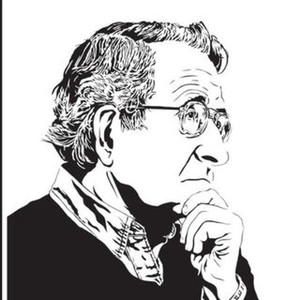
Noam Chomsky is a highly influential American linguist, philosopher, cognitive scientist, and political activist. He is a Laureate Professor of Linguistics at the University of Arizona and an Institute Professor Emeritus at the Massachusetts Institute of Technology (MIT). Chomsky is widely regarded as the "father of modern linguistics" for his groundbreaking work in the field, particularly his theory of generative grammar. He is also a prominent public intellectual known for his political commentary and activism.
Noam Shazeer is an American computer scientist and entrepreneur, best known as a co-inventor of the Transformer architecture, which is fundamental to modern large language models like GPT. He recently returned to Google as VP Engineering and Gemini Co-lead after co-founding and serving as CEO of Character.AI. His other key inventions include Sparsely-gated Mixture of Experts and Mesh-Tensorflow.
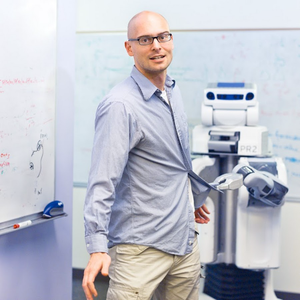
Pieter Abbeel is a highly influential figure in the fields of machine learning and robotics, serving as a Professor and Director of the Robot Learning Lab at UC Berkeley. He is a co-founder of covariant.ai and Gradescope, an advisor to OpenAI, and an Investment Partner at AIX Ventures. His pioneering research focuses on deep reinforcement learning, deep imitation learning, and meta-learning, with his work frequently featured in popular media.
Quoc V. Le is a Vietnamese-American computer scientist and a pioneering machine learning expert, known for his work as a founding member of the Google Brain project. He is currently a Distinguished Scientist at Google, where he is a leading researcher in artificial intelligence and deep learning, notably contributing to the development of AutoML.
Raia Hadsell is a VP of Research at Google DeepMind, where she has been working since 2014 to pursue solutions for artificial general intelligence. Her research focuses on bringing robots to life using advances in deep learning and reinforcement learning, drawing principles from neuroscience. She is also recognized as an AI Ambassador for the UK and has served on the scientific advisory board of IPAM.
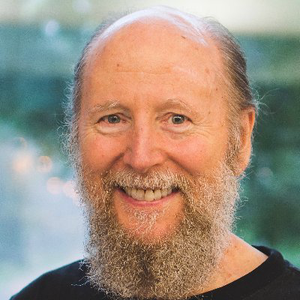
Richard Stuart Sutton is a highly influential Canadian computer scientist and a pioneer in the field of reinforcement learning (RL). He is a Professor of Computing Science at the University of Alberta and a co-author of the standard textbook, "Reinforcement Learning: An Introduction." Sutton, along with his collaborator Andrew Barto, was honored with the prestigious Turing Award for their foundational work in developing the basic algorithmic approaches for modern computational RL, including temporal difference learning.
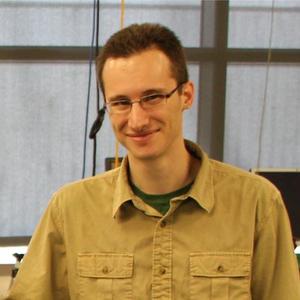
Sergey Levine is an Associate Professor at the University of California, Berkeley, and a co-founder of Physical Intelligence. His research focuses on machine learning for decision-making and control, with a strong emphasis on deep learning and reinforcement learning algorithms. He develops general-purpose methods that enable autonomous agents to acquire complex behaviors through learning, particularly in the fields of robotics and AI.
Shane Legg is the Co-founder and Chief AGI Scientist at Google DeepMind, where he leads the Technical AGI Safety team. He is a prominent machine learning researcher and entrepreneur who co-founded DeepMind Technologies in 2010, which was later acquired by Google. Legg is a leading expert on Artificial General Intelligence (AGI) and is known for his belief that there is a 50% chance of achieving AGI by 2028. He was appointed Commander of the Order of the British Empire (CBE) in 2019 for services to science and technology.

Stephen Hawking was an English theoretical physicist, cosmologist, and author, widely regarded as one of the most influential scientists of his time. He was the director of research at the Centre for Theoretical Cosmology at the University of Cambridge and held the Lucasian Professor of Mathematics chair. His landmark book, "A Brief History of Time," published in 1988, became a global bestseller, popularizing complex concepts in cosmology and quantum gravity.
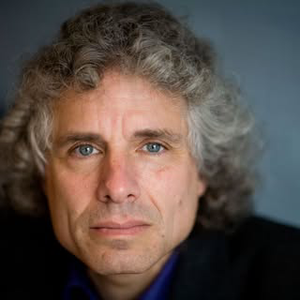
Steven Pinker is a Canadian-American experimental psychologist, cognitive scientist, and popular science author, currently serving as the Johnstone Family Professor of Psychology at Harvard University. His research focuses on a wide range of topics including language, visual cognition, developmental linguistics, emotion, and rationality. He is also known for his influential books on language, mind, and human nature.
Dr. Timnit Gebru is a prominent Eritrean Ethiopian-born computer scientist and activist known for her work on algorithmic bias and the ethics of artificial intelligence. She is the founder and executive director of the Distributed AI Research Institute (DAIR) and co-founded the non-profit Black in AI. Gebru gained widespread attention after her controversial firing from Google, where she co-led the Ethical AI research team, following a dispute over a paper warning about the dangers of large language models. She has been recognized as one of TIME 100's most influential people in the world.
Tom Mitchell is a highly influential researcher in Machine Learning, Artificial Intelligence, and Cognitive Neuroscience, best known for founding the Machine Learning Department at Carnegie Mellon University (CMU) and leading it for its first decade. He is the author of the seminal 1997 textbook, "Machine Learning," which is widely regarded as one of the first comprehensive introductions to the field. Currently, he serves as a Founders University Professor at CMU, focusing his research on how AI can improve education and its impact on the future of work.
Yann LeCun is a French-American computer scientist and one of the founding fathers of deep learning, alongside Yoshua Bengio and Geoffrey Hinton. He currently serves as the Chief AI Scientist at Meta (formerly Facebook) and is a Silver Professor at New York University (NYU). LeCun is best known for his work on convolutional neural networks (CNNs), which are foundational to modern computer vision and AI applications. He was awarded the 2018 Turing Award for his pioneering work in deep learning.
Yoshua Bengio is a Canadian computer scientist and one of the world's leading experts in artificial intelligence, recognized as a pioneer of deep learning and artificial neural networks. He is a Full Professor at the Université de Montréal, the Founder and Scientific Advisor of Mila (Quebec Artificial Intelligence Institute), and a recipient of the 2018 A.M. Turing Award, often considered the Nobel Prize of computing. He is also noted as one of the most-cited AI researchers globally.