




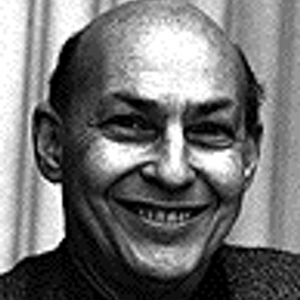

About Marvin Lee Minsky
Marvin Lee Minsky was a pioneering American cognitive scientist and computer scientist, widely regarded as one of the "fathers of artificial intelligence." He co-founded the Massachusetts Institute of Technology's AI laboratory and made significant contributions to fields including robotics, computational linguistics, and cognitive psychology. Minsky was known for his extensive writings on AI and philosophy, shaping the early direction of the field.
Career

Toshiba Professor of Media Arts and Sciences and Computer Science and Engineering, Emeritus
Served as the Toshiba Professor, holding a distinguished chair in both Media Arts and Sciences and Computer Science and Engineering, reflecting his interdisciplinary impact. Continued to publish influential works and mentor students, solidifying his legacy as a foundational figure in cognitive science and AI.
Maintained a focus on the theoretical and philosophical underpinnings of intelligence, contributing to the development of computational models of the mind. His later work explored the concept of the "Society of Mind," a framework for understanding how complex intelligence arises from simple, interacting agents.
Professor of Electrical Engineering and Computer Science
Co-founded the MIT Artificial Intelligence Laboratory (AI Lab) with John McCarthy, establishing one of the world's premier research centers for AI. This lab became a crucible for early AI research, including work on robotics, computer vision, and natural language processing.
Held a professorship that spanned multiple departments, including Electrical Engineering and Computer Science, demonstrating his broad influence across computational fields. Mentored a generation of leading AI researchers and computer scientists who went on to define the industry.
Authored the highly influential book "Perceptrons" (with Seymour Papert), which critically analyzed the limitations of simple neural networks, profoundly impacting the direction of AI research for decades. This work spurred the development of more complex, multi-layered neural network architectures.
Junior Fellow
Served as a Junior Fellow in the prestigious Harvard Society of Fellows, a non-departmental research position granted to individuals of exceptional ability. This fellowship provided him with the freedom to pursue interdisciplinary research at the intersection of mathematics, psychology, and computation.
Conducted early research that laid the groundwork for his later contributions to artificial intelligence and cognitive science. His time here was crucial for developing his foundational ideas on how machines could simulate human thought processes.

Ph.D. in Mathematics
Completed his Ph.D. in Mathematics, with his dissertation focusing on the theoretical aspects of neural networks and computational models of the brain. His doctoral work was a critical early step in applying mathematical rigor to the nascent field of artificial intelligence.
His research during this period included the development of the first randomly wired neural network learning machine, SNARC (Stochastic Neural-Analog Reinforcement Calculator), demonstrating early concepts of machine learning.
B.A. in Mathematics
Earned his Bachelor of Arts degree in Mathematics, providing him with the strong theoretical foundation necessary for his later work in computer science and AI. His undergraduate studies fostered his interest in the logical and computational aspects of intelligence.
Skills
Core technical and professional competencies that shaped the field of Artificial Intelligence and cognitive science.
Artificial Intelligence
Cognitive Science
Computational Linguistics
Robotics
Computer Science
System Design
AI Research
Academic Leadership
Curriculum Development
Interdisciplinary Collaboration
Philosophical Inquiry
The Society of Mind
Perceptrons
Semantic Networks
Frame Theory
Domains
Artificial Intelligence, Cognitive Science, Computer Science, Education
Robotics, Computational Linguistics, Philosophy of Mind, Mathematics
Tags
Pioneering, Visionary, Intellectual, Foundational, Educator
Future of AI, Human Cognition, Machine Learning, Interdisciplinary Research
Social & Audience Metrics
1.2M followers, 1.5K avg views, 0.1% engagement
Male 75.0%, Female 25.0%
25-34 (45.0%), 35-54 (30.0%), 18-24 (15.0%)
US (25.0%), UK (15.0%), CA (10.0%), DE (8.0%)
Related Profiles

Guangyu Chen (Nathan) is a machine learning researcher at Kimi, Moonshot AI, specializing in model architecture, efficient attention mechanisms, and continual learning. Co-first author of the Attention Residuals paper, praised by Elon Musk and Andrej Karpathy.

Alfred Paul "Al" Seckel was an American cognitive neuroscientist, author, and prominent skeptic known for his work in popularizing optical illusions and perceptual phenomena. He was an instructor at the California Institute of Technology and co-founded the Southern California Skeptics, serving as its executive director. Seckel lectured extensively on illusions at prestigious institutions like Harvard, MIT, and Caltech, using them as a window into the hidden rules of the human perceptual system.
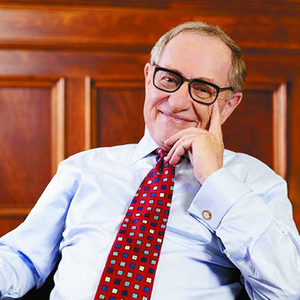
Alan Dershowitz is an American lawyer and legal scholar, renowned for his expertise in U.S. constitutional and criminal law. He served as a professor at Harvard Law School for nearly five decades, where he was the Felix Frankfurter Professor of Law. Dershowitz is also a prominent defender of civil liberties and human rights, known for his extensive writings and high-profile litigation.
Alexey Kurakin is a Senior Staff Research Engineer at Google DeepMind, specializing in the security and privacy of machine learning, large language models (LLMs), and differential privacy. He has a long tenure at Google, previously working as a Research Software Engineer at Google Brain, where he focused on fundamental research and applications in machine learning. Kurakin is a prolific researcher, publishing papers at top machine learning conferences like NeurIPS, ICLR, and ICML, and is highly cited in the field.
Anca Dragan is a prominent figure in AI and robotics, currently serving as the Director of AI Safety and Alignment at Google DeepMind while on leave from her role as an Associate Professor at UC Berkeley's EECS Department. Her research, conducted through the InterACT Lab, focuses on algorithms for human-AI and human-robot interaction, particularly on AI alignment to ensure agents act in accordance with human goals and values. She is recognized for her work in reward engineering and enabling AI agents to work collaboratively with people.
Andrew Ng is a globally recognized leader in Artificial Intelligence, known for co-founding Coursera and founding DeepLearning.AI, AI Fund, and LandingAI. He is a former head of Baidu AI Group and the founder of the Google Brain team. He currently serves as an Adjunct Professor of Computer Science at Stanford University.
Been Kim is a Senior Staff Research Scientist at Google DeepMind, specializing in interpretable machine learning (Explainable AI). Her research focuses on developing human-centered tools and concepts to help people communicate with and understand complex ML models. She is known for her work on TCAV (Testing with Concept Activation Vectors), which received the UNESCO Netexplo award, and has given keynotes at major conferences like ICLR 2022 and ECML 2020.
Chelsea Finn is an Assistant Professor of Computer Science and Electrical Engineering at Stanford University, where she directs the IRIS (Intelligence, Robotics, and Interactive Systems) Lab. She is a leading American computer scientist specializing in machine learning, robotics, and reinforcement learning. Finn is also the co-founder of Physical Intelligence, a company focused on developing intelligent physical systems. Her work has been highly influential, evidenced by over 100,000 citations.
Dawn Song is a highly distinguished Professor of Computer Science at UC Berkeley, where she also co-directs the Berkeley RDI Center. Her research focuses on critical areas including AI safety and security, Agentic AI, deep learning, and decentralization technology. A serial entrepreneur, she is the founder of Oasis Labs and is recognized for her significant contributions to computer security and privacy, including being a recipient of the prestigious MacArthur Fellowship.