




First taste of #freefall Thank you @northlondonskydiving #skydiving #skydivingadventures
First taste of #freefall Thank you @northlondonskydiving #skydiving #skydivingadventures

CEO and Founder / UnlikelyAI


William Tunstall-Pedoe is a British computer scientist, entrepreneur, and AI pioneer, best known as a senior member of the team that invented and launched Amazon Alexa. He founded Evi (originally True Knowledge), the AI startup whose technology was acquired by Amazon and became the foundation for Alexa. Currently, he is the Founder and CEO of UnlikelyAI, a deep tech startup focused on creating trustworthy and effective general AI using neuro-symbolic methods.

CEO and Founder
UnlikelyAI is a deep tech startup working to create a world where highly intelligent automated systems enable humanity to flourish and benefit us all. We are pioneering transformative technology aimed at making Artificial Intelligence more accurate, trustworthy and safe. We are combining the fantastic opportunities created using LLMs with the trust, accuracy and explainability of symbolic/algorithmic methods, which together we call our neurosymbolic platform.

Advisor
Developed by a team of doctors, scientists, and engineers with the belief that every person in the world should have access to quality, personalized health information, and care.
Ada has over a million users and has ranked #1 in the Medical Category in over 130 countries including the United States, United Kingdom, Germany, China, Sweden, and Canada.
Ada is an extremely exciting business with deep technology, enormous potential and one of only a tiny number of start-ups that I have a long-term advisor relationship.

Member of the Advisory Panel
Cambridge Innovation Capital (“CIC”) combines a unique relationship with the University of Cambridge with deep financial and industry links to invest in rapidly growing intellectual property rich companies in the Cambridge Cluster.

Full member
Cambridge Angels is a group of high-net worth investors who have proven experience as successful entrepreneurs in technology and bio-technology. Members invest in and mentor high quality start-up and early-stage companies in these sectors. Members have been responsible for a large number of the “Cambridge Phenomenon” success stories over recent years.

Founder and owner
Genius 2000 Ltd is a limited company I have used for multiple purposes over the years.
It has previously marketed early versions of AI cryptic crossword technology. Another product, Anagram Genius, uses AI techniques to generate interesting and relevant anagrams of any text and has been used by millions of people, including Dan Brown who used it to create the anagrams that were integral to the plot of the Da Vinci Code movie and novel (my name appears in the acknowledgements of all 80 million copies sold).

Fellow
The Creative Destruction Lab is a seed-stage program for massively scalable, science and technology-based companies. The program employs an objectives-based mentoring process with the goal of maximizing equity-value creation.

Fellow
The Creative Destruction Lab (CDL) is a unique program for massively scalable technology-based ventures. It is a business incubator, associated with the University of Toronto, with two large Artificial Intelligence/Machine Learning tracks where I am focused. I am still based in the UK but am travelling to Toronto every couple of months to do what I can to help the many promising start-ups that are accepted. I also advise CDL companies remotely between meetings.

Fellow in Entrepreneurship
The Judge is one of the top business schools in the world, offering a variety of teaching programmes including the Cambridge MBA, the Cambridge Master of Finance, the Cambridge Executive MBA, PhD, MPhil and undergraduate degrees together with a suite of Executive Education courses.

Advisor
Fluent offers OEMs and user interface designers a speech interface solution for their products and services. Fluent’s patented approach sidesteps the need to convert speech to text and instead learns to understand the meaning of audible speech — in any language or accent. The result is highly flexible, accessible and accurate voice interface that performs robustly even in offline and noisy environments.

myself
A little more then ten years after founding Evi (True Knowledge) I have made the difficult decision to move on. This period was seven years leading a British venture-backed start-up and three+ as a leader within Amazon. The acquisition was highly successful, resulting in Alexa - a product almost everyone has heard of and which has sold hundreds of millions of devices. I am proud to have been a member of the launch team. The Evi team is also thriving and Amazon's Cambridge (UK) development centre is the result. I am taking time off and thinking gently about what I want to do next.

Principal Product Manager (Alexa and Amazon Echo)
Following the successful acquisition of Evi by Amazon, I worked in a leadership role within the Evi team but was also principal product manager in Alexa, with a desk in both Seattle and Cambridge, UK. I was a senior member of the team that defined, built and launched Amazon Alexa and Amazon Echo (the first Alexa device). We launched the first Alexa device in late 2014 and I continued to develop the product for several years post launch.

Founder and Chief Product Officer
Following the launch of the highly successful Evi product and the intense pipeline of interest that followed, I recruited a highly experienced Silicon Valley executive to work with the team as CEO and I moved to the role of Chief Product Officer. The company was successfully sold to Amazon within six months of this happening.

Founder and CEO
Evi (formerly True Knowledge) is a venture backed business with an extremely exciting natural language understanding and automatic question answering technology.
The company's final successful pivot built on this technology was Evi a voice assistant product that converses with you, understands you and directly answers.The first version was launched in late January 2012 and is available for both Android phones and iPhones. The app became #1 in the Apple app store and had several million downloads within weeks of launch.
Behind Evi is a platform containing a knowledge base of machine understandable structured knowledge which can be used to understand the natural language spoken by the user or compute the answers to questions on any topic using generalised inference.
The technology was also used by a number of mobile search and other customers and answered millions of questions per month asked by mobile and internet users.
I invented the technology, founded the business to further develop and commercialise the technology and raised several rounds of venture capital. I also lead the development and launch of Evi.

Developer
This was a part time position handling the IT requirements of the university department, developing their internal systems and providing technical support to the participant mathematicians. The highlight was witnessing Wiles announce his proof of Fermat's Last Theorem when I was there - an event which made the front page of almost every newspaper worldwide the next day.

Software Engineer
I independently developed a commercial chess-playing package (Cyber Chess). This is still the definitive chess software for the Acorn/RISC OS platform.
The Fourth Dimension was the publisher that won the auction to publish the software after I had developed it and had to resolve multiple competing offers to publish it.
Software Engineer
IOTA Software was a software start-up formed by former Acorn employees. I was one of the earliest and developed a commercial tracing package (automatic conversion of bitmap to vector graphics) from commencement to publication in three months.

Software Engineer
I developed the systems used in a large drug study to validate the first statin cholesterol-lowering drugs.

Support Specialist
I provided technical support to dealers, large educational customers and end users on all of Acorn's hardware and software products.

Software Engineer
Whilst at High School I developed numerous commercial applications for the Acorn platform which I then licensed to this and other companies for publication. Some of these were considered major products and the licensing deals I negotiated gave me a substantial income as a child.

Software Engineer
In my late teens I was contracted by the University of Minnesota to indepedently do a feasibility study into the use of portable computers for various drug studies that were taking place there.

ASR (Automatic Speech Recognition) Research
At the age of 18, I worked on a speech recognition project (getting computers to recognise/understand human speech). We took a feature based approach and my personal research was largely focussed on the analysis and recognition of fricatives.
VLSI Research
VLSI Process Architecture Research Laboratory. I worked on a research project using computers to simulate the manufacture of silicon devices in VLSI. This involved simulating dopant diffusion, the annealing processes etc. for various kinds of chips including radiation hard versions with insulator substrate for military use. I also wrote of suite of software which interfaced a French process simulator (TITAN) with GEC's device modelling software (MADMACS). I was the sole author of an internal technical report on this work - the first gap year student to do so. Skills: FORTRAN, VMS, handling large quantities of source code written by large numbers of different people. Some solid state physics.

MA
MA - Computer Science
Core technical and professional competencies in AI, entrepreneurship, and product innovation, spanning over 40 years of software development.
Artificial Intelligence
Machine Learning
Natural Language Understanding
Speech Recognition
Neuro-Symbolic AI
Knowledge Representation
Question Answering
Computational Linguistics
Start-ups
Entrepreneurship
Venture Capital
Angel Investing
Business Strategy
Mergers & Acquisitions
Product Management
Intellectual Property
Software Development
Software Engineering
Software Design
Distributed Systems
Python
C++
FORTRAN
Artificial Intelligence, Conversational AI, Voice Assistants, Deep Tech, Neuro-Symbolic Methods
Venture Capital, Startup Mentoring, Health Tech (Advisor to Ada Health)
AI Pioneer, Visionary, Entrepreneurial, Inventor, Deep Thinker, Highly Experienced
Trustworthy AI, General AI, Innovation, Problem-Solving, Long-Term Impact
First taste of #freefall Thank you @northlondonskydiving #skydiving #skydivingadventures
After seven years as a neighbour watching the former US embassy on #grosvenorsquare get transformed into the #chanceryrosewoodlondon hotel it was great to get a tour ahead of the official opening and
One of the more frightening haircuts I’ve ever had. At a random Turkish barber (in Turkey) at 11pm at night…. #TurkishBarber #BarberInTurkey #LateNightHaircut #BodrumBarber #TurkishExperience #TravelA
Most confusing toilet door.
First press (from a few weeks ago) about my new startup.
Adam Bry is the Co-founder and CEO of Skydio, a leading US drone manufacturer and world leader in autonomous flight technology. With a background in computer science and robotics from MIT and experience at Google's Project Wing, he is focused on building flying robots that serve as critical infrastructure for civilization. He also advises the FAA on regulatory frameworks for the future of aviation.

Adam Neumann is the co-founder and former CEO of WeWork, a global coworking space company. Following his departure from WeWork, he launched Flow, a real estate platform focused on residential properties, which has raised over $100 million at a $2.5 billion valuation, backed by a16z. Neumann is known for his entrepreneurial vision and focus on community and culture in real estate ventures.
Adarsh Hiremath is the Co-Founder and CTO of Mercor, an AI-powered recruitment startup that helps Silicon Valley's biggest AI labs train their models. He dropped out of Harvard University during his sophomore year after co-founding Mercor in his dorm room, convinced that labor aggregation was the greatest opportunity of the 21st century. Hiremath was awarded the prestigious Thiel Fellowship and is recognized as a leading figure in the future of work in an AI economy.
Aidan Gomez is a British-Canadian computer scientist and the Co-founder and CEO of Cohere, a leading AI platform focused on enterprise applications. He is a major figure in the field of artificial intelligence, particularly for his work on massive neural networks and natural language processing, and was one of the co-authors of the seminal "Attention is All You Need" paper. He holds a PhD in Computer Science from the University of Oxford.
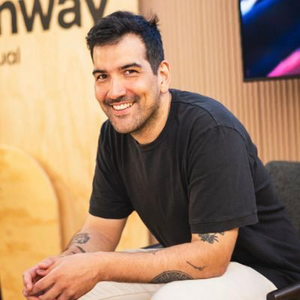
Alejandro Matamala Ortiz is the Co-founder and Chief Design Officer (CDO) of Runway, a pioneering machine learning platform focused on generative AI for creative tools. Based in New York, he is a designer and programmer working at the intersection of design, technology, and creative intelligence. He frequently speaks at industry events about the transformative role of generative AI in media.
Alex Kendall is the Co-founder and CEO of Wayve, a company pioneering the development of next-generation autonomous vehicles using Embodied AI and end-to-end deep learning. A proud Kiwi, he co-founded Wayve in 2017 with a vision to replace traditional autonomous vehicle stacks with a data-driven solution. He is also a highly cited researcher in Deep Learning and Computer Vision, with over 50,000 citations for his academic work.
Alex Shevchenko is the Co-Founder and Board Member of Grammarly, an AI productivity platform that started as a digital writing assistant. He was also a Co-Founder of MyDropBox.com, which was acquired by Blackboard. His expertise lies in new product development, product strategy, and strategic marketing.
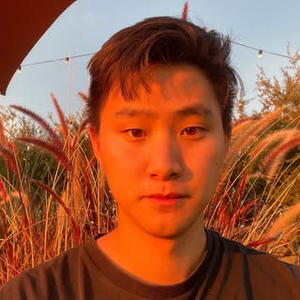
Alexandr Wang is a prominent figure in the artificial intelligence industry, best known as the co-founder and former CEO of Scale AI, a company specializing in data labeling and large language model evaluation. He became the world's youngest self-made billionaire in 2022. In June 2025, he transitioned to become the first-ever Chief AI Officer at Meta, leading the Meta Superintelligence Labs (MSL).
Ali Ghodsi is the CEO and Co-founder of Databricks, a leading data and AI company that he has helped grow into a multi-billion dollar enterprise. He is a prominent voice in the AI industry, known for his controversial assertion that Artificial General Intelligence (AGI) has already been achieved. Ghodsi is also an Adjunct Professor at UC Berkeley, bringing a strong academic background in computer science and distributed systems to his entrepreneurial endeavors.
A summary of William Tunstall-Pedoe's profile focusing on his foundational role in Amazon Alexa and his current work as CEO of UnlikelyAI.
He is the Founder and CEO of UnlikelyAI, a deep tech startup he established in January 2019.
UnlikelyAI focuses on creating trustworthy and effective general AI using neuro-symbolic methods.
Yes, he was elected as a Fellow of the Royal Academy of Engineering in 2019.
Yes, he has been involved with Ada Health since October 2017 and with Cambridge Innovation Capital plc since April 2017.