





About Dario Amodei
Dario Amodei is an American artificial intelligence researcher and entrepreneur, best known as the co-founder and CEO of Anthropic, a public benefit corporation focused on building safe, steerable, and interpretable AI systems like Claude. Prior to founding Anthropic in 2021, he was the Vice President of Research at OpenAI, where he led the development of the groundbreaking GPT-2 and GPT-3 models. Amodei holds a PhD in Computational Neuroscience from Princeton and has a strong background in physics and deep learning research from his time at Google Brain and Baidu.
Education
PhD
PhD - (Bio)physics
BS
BS - Physics
Progress towards BS
Progress towards BS - Physics
Work Experience
CEO and Co-Founder
Combining scaling and long-term AI alignment methods to build steerable, interpretable, and robust AI systems.
Vice President of Research
* I led the efforts to build GPT-2 and GPT-3 (https://arxiv.org/abs/2005.14165).
* I am one of two people who sets overall research direction at OpenAI and writes its annual research roadmap.
* In addition I have built and lead several teams focused on long-term safety research, including how to make AI systems more interpretable and how to embed human preferences and values in future powerful AI systems. Vice President of Research Dec 2019 - Dec 2020 · 1 yr 1 mo
Research Director
Research Director
Team Lead for AI Safety
Team Lead for AI Safety
Senior Research Scientist
I worked as a deep learning researcher on the Google Brain team, working to extend the capabilities of neural networks. I have also worked on the safety and reliability of AI systems, and recently published a paper (with Chris Olah and several other researchers) laying out some key problems for preventing accidents in AI systems. Our work (https://arxiv.org/abs/1606.06565) is described here (https://www.technologyreview.com/s/601750/google-gets-practical-about-the-dangers-of-ai/).
Research Scientist
I work with Andrew Ng and a small team of AI scientists and systems engineers to solve hard problems in deep learning and AI, including speech recognition and natural language processing.
* Performed the majority of machine learning research for Deep Speech 2 (http://arxiv.org/abs/1512.02595), listed by MIT Technology Review as one of the top 10 technological breakthroughs of 2016 (https://www.technologyreview.com/s/600766/10-breakthrough-technologies-2016-conversational-interfaces/)
* Conceived, prototyped and implemented a neural network architecture that achieved a 35% relative reduction in the word error rate (WER) of the lab's English speech system.
* Conceived, prototyped and implemented a neural network architecture that achieved a 15% relative reduction in the WER of the lab's Chinese speech system.
* Increased speed of decoder by 10x in Chinese and English, removing a key obstacle to deployment of the lab's speech system to Baidu users.
* Increased speed of training for Chinese system by 27% and reduced memory usage by 50%, resulting in a substantial increase in lab-wide productivity and computational efficiency.
* Co-developer (with Jim Fan and Jesse Engel) of Baidu's internal neural network library
* Awarded "Star Employee of the Quarter" for Q2 2015.
Software Developer (part-time)
Skyline is a comprehensive software suite essential to the research of a large fraction of the proteomics community: 30,000 unique installs, 7000 instances/week, 300K lines of C# code, 10 professional programmers
• Personally contributed 14K lines of code (net, human-generated) + 50 pages tutorials and docs.
• Invented and implemented peak picking, binary classification, Storey-Tipshirani, and signal processing algorithms for mass spectrometry data, now widely employed by Skyline’s user base.
• Instructor at weeklong course (Zurich, February 2014) attended by 40 on how to use Skyline, invited to teach second course in Barcelona (October 2014).
• Featured speaker at Skyline user group meeting (June 2014, attendees: 250), and IMSC Work-
shop (August 2014, attendees: 100+)
• Regularly handle support requests from Skyline users (3-4 requests/week)
Postdoctoral Scholar
- Researching improved computational methods for acquisition and analysis of high-throughput protein expression data (C#, Python, Matlab).
- Invented, developed, and implemented protein detection and statistical confidence algorithms and tools that have driven the field-wide adoption of next-generation high throughput mass spectrometry.
- Developed multiplexing technique that increases peptides detected per run by 25%.
- Contributed to open source proteomics software projects, including Skyline and Proteowizard.
- Developed method for distinguishing cancer cells from normal cells using biophysical modeling and linear classification.
Consulant
• Help invent and develop breakthrough products for industry and government.
• Design and conduct simulations to address unusually difficult physics and math problems.
• Experience with electromagnetic devices, complex mechanical systems.
PhD Student in Computational Neuroscience
- Dissertation awarded Hertz Doctoral Thesis Prize, 2012.
- Co-authored grant proposal leading to McKnight Technological Innovations in Neuroscience Award (4 awards given out of 97 proposals).
- Developed Hopfield-style statistical models for real (biological) neural networks in retina and cortex (implemented in C/Matlab).
- Helped develop novel algorithms to solve neural mixed-signal (spike sorting) problems at 300 neuron scale (C/C++). Performed first ever recording of a complete 0.5x0.5mm patch of retina.
- Co-invented and developed novel device for in vivo intracellular recording, personally built initial prototypes in fabrication facility.
Geophysicist
• Invented and developed highly mathematical techniques in computational seismology.
• Published non-confidential portions of my research in Physical Review E.
• Sole author on Schlumberger confidential report (35 pages) on remaining research.
• Wrote 5000 lines of Matlab, Fortran to implement theoretical work.
Research Intern
• Designed robust, fault-tolerant, highly mathematical algorithms for parallel distributed systems.
• Participated actively and independently in whole development pipeline, from theoretical algo-
rithm development to software simulation to building a physical network of microcontrollers.
• Results published in confidential AMI report.
Technical Skills & Expertise
A foundation in theoretical physics and computational neuroscience, leading to extensive expertise in modern AI/ML development.
Machine Learning
Algorithms
Mathematical Modeling
Deep Learning
AI Safety
Python
C#
Matlab
Simulations
LaTeX
Physics
Bioinformatics
Computational Neuroscience
Proteomics
Related Profiles
Adam Bry is the Co-founder and CEO of Skydio, a leading US drone manufacturer and world leader in autonomous flight technology. With a background in computer science and robotics from MIT and experience at Google's Project Wing, he is focused on building flying robots that serve as critical infrastructure for civilization. He also advises the FAA on regulatory frameworks for the future of aviation.

Adam Neumann is the co-founder and former CEO of WeWork, a global coworking space company. Following his departure from WeWork, he launched Flow, a real estate platform focused on residential properties, which has raised over $100 million at a $2.5 billion valuation, backed by a16z. Neumann is known for his entrepreneurial vision and focus on community and culture in real estate ventures.
Adarsh Hiremath is the Co-Founder and CTO of Mercor, an AI-powered recruitment startup that helps Silicon Valley's biggest AI labs train their models. He dropped out of Harvard University during his sophomore year after co-founding Mercor in his dorm room, convinced that labor aggregation was the greatest opportunity of the 21st century. Hiremath was awarded the prestigious Thiel Fellowship and is recognized as a leading figure in the future of work in an AI economy.
Aidan Gomez is a British-Canadian computer scientist and the Co-founder and CEO of Cohere, a leading AI platform focused on enterprise applications. He is a major figure in the field of artificial intelligence, particularly for his work on massive neural networks and natural language processing, and was one of the co-authors of the seminal "Attention is All You Need" paper. He holds a PhD in Computer Science from the University of Oxford.
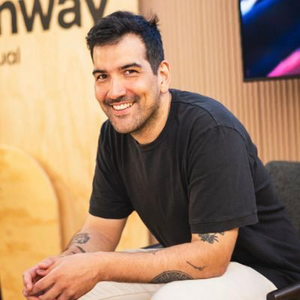
Alejandro Matamala Ortiz is the Co-founder and Chief Design Officer (CDO) of Runway, a pioneering machine learning platform focused on generative AI for creative tools. Based in New York, he is a designer and programmer working at the intersection of design, technology, and creative intelligence. He frequently speaks at industry events about the transformative role of generative AI in media.
Alex Kendall is the Co-founder and CEO of Wayve, a company pioneering the development of next-generation autonomous vehicles using Embodied AI and end-to-end deep learning. A proud Kiwi, he co-founded Wayve in 2017 with a vision to replace traditional autonomous vehicle stacks with a data-driven solution. He is also a highly cited researcher in Deep Learning and Computer Vision, with over 50,000 citations for his academic work.
Alex Shevchenko is the Co-Founder and Board Member of Grammarly, an AI productivity platform that started as a digital writing assistant. He was also a Co-Founder of MyDropBox.com, which was acquired by Blackboard. His expertise lies in new product development, product strategy, and strategic marketing.
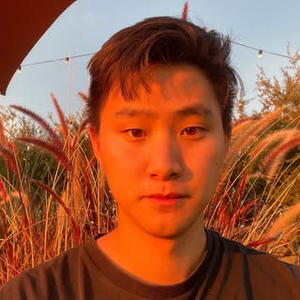
Alexandr Wang is a prominent figure in the artificial intelligence industry, best known as the co-founder and former CEO of Scale AI, a company specializing in data labeling and large language model evaluation. He became the world's youngest self-made billionaire in 2022. In June 2025, he transitioned to become the first-ever Chief AI Officer at Meta, leading the Meta Superintelligence Labs (MSL).
Ali Ghodsi is the CEO and Co-founder of Databricks, a leading data and AI company that he has helped grow into a multi-billion dollar enterprise. He is a prominent voice in the AI industry, known for his controversial assertion that Artificial General Intelligence (AGI) has already been achieved. Ghodsi is also an Adjunct Professor at UC Berkeley, bringing a strong academic background in computer science and distributed systems to his entrepreneurial endeavors.